Category: Zero Trust Data Access
-
Cloudflare One and FileFlex Enterprise—Securing Apps and Data Together
Cloudflare One secures access to applications and the Internet, while FileFlex Enterprise complements it by protecting sensitive files with file-level permissions, auditing, and governance for a complete Zero Trust strategy.
-
Federated Hybrid Access: Why Modern Organizations Can't Afford to Ignore It
Federated hybrid access enables organizations to securely and consistently govern data across distributed hybrid IT environments by closing the zero trust data gap and restoring centralized control, compliance, and auditability.
-
NIST SP 1800-35: How Data-Level Enforcement Strengthens Zero Trust Security
NIST SP 1800-35 provides practical, real-world guidance for implementing Zero Trust Architecture, highlighting that effective Zero Trust requires not only identity and network controls but also robust data-level enforcement to secure sensitive information across hybrid and distributed environments.
-
The Zero Trust Data Gap: Closing the Blind Spot in Modern Security Architectures
The Zero Trust Data Gap leaves unstructured data exposed even in mature security environments, and FileFlex Enterprise closes this gap by enforcing continuous, least-privilege access and full visibility directly at the file level across hybrid, on-premises, and cloud repositories.
-
SEC Cybersecurity Rules Driving Enterprise Security to Zero Trust Architecture: What CIOs and CISOs Need to Know
SEC cybersecurity rules are transforming enterprise security to Zero Trust architecture to protect sensitive data, ensure regulatory compliance, and strengthen board-level cybersecurity governance.
-
Hyperscaler Cloud Providers and the Data-Layer Gap: Extending Security with File-Level Controls
Hyperscaler cloud providers offer robust infrastructure security, but organizations must complement it with file-level, Zero Trust access solutions like FileFlex Enterprise to securely manage, share, and collaborate on unstructured data across hybrid and multi-cloud environments.
-
Achieving End-to-End Zero Trust with Zscaler and FileFlex
By combining Zscaler's Zero Trust Exchange with FileFlex Zero Trust Data Access, organizations can secure both application access and the data within, achieving a complete end-to-end Zero Trust framework.
-
Extending Cisco Zero Trust from Access to Data
Cisco zero trust data access is strengthened by FileFlex, which extends security to the data layer by enforcing continuous, granular file- and folder-level policies across on-premises, cloud, and hybrid environments.
-
Extending Microsoft Entra Zero Trust to Protect Your Data with Zero Trust Data Access
Microsoft Entra when combined with Active Directory delivers strong controls for identities, apps, and networks — but it stops short of protecting the data itself. FileFlex Zero Trust Data Access (ZTDA) fills this gap by enforcing file-level security, auditing every access, and extending Microsoft’s model to both Microsoft and non-Microsoft storage across hybrid environments. Together, they deliver complete Zero Trust coverage from identity to data.
-
SharePoint Under Siege: Why Zero Trust Access Is Now Critical
SharePoint zero trust security is critical for defending against zero-day vulnerabilities and access control weaknesses. By combining FileFlex with a Zero Trust Application Access solution like Illumio, organizations can eliminate direct exposure, enforce granular access, and secure SharePoint without replacing it.
-
Extending Microsoft Fabric with Zero Trust Data Access for Unstructured Data
Microsoft Fabric and Zero Trust Data Access complement each other to provide comprehensive data governance across both structured and unstructured data—even when unstructured data exists outside of Fabric’s scope. While Fabric excels at analytics and insights from structured sources within the Microsoft ecosystem, FileFlex brings Zero Trust principles to unstructured data—enabling secure, identity-based access without duplicating content or ingesting it into Fabric.
-
Smart Cities and Zero Trust Data Access: Securing the Urban Future
Smart Cities and Zero Trust Data Access go hand in hand to ensure secure, compliant, and efficient use of distributed data. By eliminating risky tools like VPNs, mapped drives, and file syncing, Zero Trust Data Access enables verified, policy-based access to data without moving or duplicating it, allowing smart cities to securely modernize infrastructure, protect sensitive services, and enable real-time collaboration—building a trusted foundation for digital transformation.
-
European Health Data Space Compliance with Zero Trust
European Health Data Space compliance requires secure, auditable, and least-privilege access to health data, starting in 2029. Zero Trust Data Access enables organizations to meet these requirements while ensuring GDPR alignment and protecting sensitive health information.
-
HIPAA Compliant File Sharing with Zero Trust: How to Secure PHI
HIPAA-compliant file sharing means adopting a robust security framework like Zero Trust Data Access (ZTDA) for guarding Protected Health Information (PHI) and complying with regulations.
-
What is Zero Trust Data Access (ZTDA)?
Zero Trust Data Access (ZTDA) is a security model that provides secure access to files and folders for authorized users in a zero-trust environment.
-
Why Microsoft-Centric Security Isn't Enough: The Case for Zero Trust Data Access
Microsoft’s native security tools are essential, but they weren’t built to fully protect unstructured data across hybrid environments. Zero Trust Data Access (ZTDA) addresses this gap by enforcing continuous identity verification and file-level access controls. ZTDA complements — not replaces — Microsoft-centric security, and solutions like FileFlex make it practical to deploy without changing infrastructure.
-
From VPN Risk to Zero Trust Security: A Smarter Approach to Remote Access
Organizations are replacing traditional VPNs with Zero Trust Data Access solutions like FileFlex Enterprise to achieve more secure, efficient, and scalable remote access that aligns with the needs of today’s cloud-enabled, hybrid, distributed business environments.
-
The Zero Trust Maturity Model and the Role of ZTDA
The Zero Trust Maturity Model (ZTMM) outlines the stages organizations go through in adopting a Zero Trust architecture — from traditional, to advanced, to optimal maturity. Reaching optimal maturity requires continuous identity verification, granular data access controls, and activity monitoring. Zero Trust Data Access (ZTDA) is key to achieving this by extending Zero Trust to file-level interactions across a hybrid infrastructure.
-
How to Build a Complete Zero Trust Security Framework
A complete Zero Trust Security framework requires both Zero Trust Network Access (ZTNA) to control user and device access to networks and apps, and Zero Trust Data Access (ZTDA) to protect sensitive data at the file level. Together, they form a unified strategy to reduce risk and prevent breaches.
-
DSPMs & ZTDA: Enhancing Zero Trust Data Security
DSPMs (Data Security Posture Management systems) help organizations discover, classify, and secure data across cloud and hybrid environments. When combined with Zero Trust Data Access, they enable real-time policy enforcement and auditing at the data layer—delivering stronger protection and compliance.
-
Top 7 Advantages of an Overlay Service
Overlay services revolutionize modern IT by providing a flexible, scalable, and cost-efficient virtual layer that enhances functionality, ensures seamless integration, and empowers businesses to adapt to evolving technological demands without disrupting existing infrastructure.
-
Top 10 Benefits of Restricting Direct Access to the Storage Infrastructure
Restricting direct access to storage infrastructure through Zero Trust Data Access (ZTDA) enhances security, reduces risks like insider threats and ransomware, ensures compliance, and improves operational efficiency by enforcing identity-based controls, abstracting data access, and leveraging advanced monitoring.
-
Benefits of Zero Trust Least Privilege Access: 9 Key Reasons
Benefits of zero trust least privilege access include reduced attack surface, enhanced compliance, and prevention of insider threats—here are 9 compelling reasons your organization needs it.
-
8 Benefits of Zero Trust Storage Management
Modern zero trust storage management improves data security by enforcing file-level access controls, eliminating blind spots, and enabling compliance without relocating data. This blog explores 8 reasons why your organization should upgrade to a zero trust approach.
-
8 Benefits of Zero Trust Activity Monitoring
Zero Trust activity monitoring provides visibility into every access request, enforces policy compliance, and detects insider threats early. This blog highlights 8 reasons your organization should adopt it.
-
Zero Trust User Access Management: 4 Best Practices
Zero Trust user access management is essential for securing today’s hybrid IT environments. It enforces least-privilege access, validates users continuously, and logs every action to reduce risk and ensure compliance. FileFlex brings this to life by extending Zero Trust to the data layer—where protection matters most.
-
Upholding Cybersecurity for Architects Through Zero Trust Data Access
Cybersecurity for architects is vital as they navigate remote collaboration and digital tool integration, with Zero Trust Data Access (ZTDA) enhancing security by ensuring secure file sharing, protecting against cyber threats, and enabling efficient workflows while maintaining compliance and safeguarding intellectual property.
-
Zero Trust for FFIEC Compliance: Why ZTDA Is the Missing Link
Modernize compliance with Zero Trust for FFIEC guidelines. The FFIEC Cybersecurity Assessment Tool outlines critical requirements for data protection—especially in “Domain 5: Data Protection.” Traditional security models fall short in hybrid, distributed environments. Zero Trust Data Access (ZTDA) enforces least-privilege file-level access, continuous authentication, and real-time visibility—making it ideal for regulated financial institutions seeking to meet or exceed FFIEC standards.
-
Advantages of Zero Trust Virtual Data Rooms for Banks and Credit Unions
Zero Trust Virtual Data Rooms provide banks and credit unions with a secure, compliant, and efficient way to manage sensitive client interactions, using user verification and least privilege access to mitigate risks and enhance data protection.
-
Supporting Financial Services Cybersecurity Through Zero Trust Data Access
Financial services cybersecurity is strengthened through the adoption of Zero Trust Data Access (ZTDA) which enhances data security and regulatory compliance, protecting access to sensitive client information.
-
Zero Trust for GLBA Compliance: File-Level Data Protection
Zero Trust for GLBA Compliance starts at the data level. GLBA requires financial institutions to safeguard customer data under its Safeguards Rule. Traditional perimeter-based security is no longer sufficient. Zero Trust Data Access (ZTDA) delivers file-level controls, continuous authentication, and detailed audit trails—aligning directly with GLBA’s technical safeguards and helping institutions achieve stronger compliance with modern threats in mind.
-
Zero Trust Cybersecurity for Credit Unions
Zero Trust cybersecurity for credit unions must go beyond network control. Zero Trust Data Access (ZTDA), protects sensitive member data at the file level through least-privilege access, identity verification, and continuous activity logging. This approach helps credit unions comply with FFIEC guidelines, reduce breach risk, and modernize cybersecurity without costly infrastructure changes..
-
Cybersecurity for Law Firms: The Priority of Zero Trust Security
Cybersecurity and Zero Trust Data Access security is crucial for law firms to protect sensitive client data, mitigate insider threats, comply with regulations, and maintain client trust amidst growing cyber threats like ransomware and data breaches.
-
How to Enforce Zero Trust Access Control to Mitigate Ransomware
Zero trust access control, achieved by integrating Illumio Core with FileFlex Enterprise, allows organizations to effectively mitigate data breaches and ransomware risks, ensuring enhanced security, visibility, and operational efficiency through centralized management and strict access controls.
-
Top Reasons to Add Zero Trust Data Access to Illumio Core
Illumio Core is extended with Zero Trust Data Access expanding Illumio’s micro-segmentation and policy enforcement to include data activity for a more comprehensive security solution that adds defense against external infiltration and data extraction to Illumio’s expertise at containing threats on the internal network before they can spread.
-
Why ZTNA Combined with ZTDA Could Have Prevented the Tesla Breach
Zero Trust Network Access (ZTNA) combined with Zero Trust Data Access (ZTDA) enhances security at both the network and data levels, significantly reducing the risk of data breaches like the one at Tesla.
-
Zero Trust for California Privacy Compliance
Zero Trust for California Privacy Compliance requires controls beyond the network. CCPA and CPRA laws mandate granular data access protections, transparency, and breach prevention. Zero Trust Data Access (ZTDA) helps organizations secure regulated data at the file level—enforcing least-privilege access, continuous identity verification, and auditable controls that align directly with California’s cybersecurity and privacy regulations.
-
Secure Zero Trust Access to FedRAMP-Compliant Data
Zero Trust Data Access (ZTDA) enhances data protection in FedRAMP-compliant environments by enforcing secure, file-level access. ZTDA does not replace or achieve FedRAMP certification—but when combined with data hosted in a FedRAMP-certified environment, it provides secure access, granular permissions, and continuous authentication to reduce insider risk and support NIST-aligned access governance.
-
Zero Trust Data Access for NIST Compliance
Achieving NIST compliance requires granular, auditable control over how sensitive data is accessed and shared. Zero Trust Data Access (ZTDA) complements NIST cybersecurity guidelines—especially NIST SP 800-53 and SP 800-207—by enforcing strict access controls at the file level, verifying identity continuously, and logging all interactions for auditability. While NIST defines what’s needed, ZTDA provides a practical path to meet those requirements.
-
CMMC IT Control Over Remote Access & Sharing Using Zero Trust
CMMC IT control over the remote access and sharing of CUI unstructured data is achieved via a zero-trust data access platform to improve security, increase productivity, and simplify file management and control, making it an attractive option for DIB organizations to meet CMMC requirements.
-
Zero Trust Data Access for DIB Cybersecurity Strategy
Zero Trust Data Access (ZTDA) is critical for DIB cybersecurity compliance. The 2024 DIB Cybersecurity Strategy demands granular control and logging of access to defense-related data. ZTDA enforces continuous authentication, least-privilege, and real-time audit of file access—ensuring compliance with new era regulations while securing both on‑premises and hybrid environments.
-
Zero Trust Data Access for CMMC Compliance
Zero Trust Data Access ensures secure CUI collaboration under CMMC. CMMC mandates granular protection of Controlled Unclassified Information. ZTDA adds continuous authentication, file-level permissions, and audit trails on top of compliant infrastructure—helping organizations safely share and collaborate without vulnerabilities.
-
How Zero Trust Data Access Cuts Operational Costs
The adoption of Zero Trust Data Access, particularly through FileFlex Enterprise, revolutionizes organizational operations by strengthening security measures and streamlining costs by reducing the use of VPNs, file sharing, collaboration platforms, and virtual data rooms. Through its unified ecosystem, ZTDA represents a paradigm shift in security strategies, offering superior protection while reducing expenditures.
-
Zero Trust Data Access for IT-Controlled Chain-of-Command
IT-controlled chain-of-command over unstructured data using Zero Trust Data Access plays a crucial role in enhancing data security and regulatory compliance.
-
DORA Compliance Using Zero Trust Data Access
DORA compliance for file sharing, access and collaboration necessitates the implementation of Zero Trust Data Access (ZTDA). ZTDA has stringent security measures such as granular access control, continuous authentication, encryption, micro-segmentation, and activity monitoring that align with the Digital Operational Resilience Act’s rigorous standards for cybersecurity and operational resilience within the financial sector.
-
GDPR-Compliant File Sharing with Zero Trust
GDPR-compliant file sharing means exchanging personal data in a way that meets the EU’s strict data protection rules. It requires encryption, strict access controls, audit logging, and transparency to ensure lawful and secure file transfers.
-
Zero Trust Data Access as an MFT Alternative
Recent breaches in managed file transfer services (MFT) reinforce the need for a more robust alternative based on a zero-trust data access architecture.
-
Cyber Defense After the GoAnywhere and MOVEit Breaches
The recent GoAnywhere and MOVEit breaches reinforce the need for a more robust alternative based on a zero-trust data access architecture.
-
24 Reasons to Use Zero Trust Data Access as an FTP Alternative
Zero Trust Data Access (ZTDA) is an FTP alternative that offers enhanced security, regulatory compliance, simplified management, and improved user experience.
-
Content Collaboration Using Zero Trust Data Access
A zero-trust secure content collaboration platform safeguards data through stringent access controls, reducing the risk of ransomware, and enhancing overall cybersecurity, ensuring a resilient and secure platform for collaborative work.
-
Secure Virtual Data Room Solutions via Zero Trust Data Access
Secure Virtual Data Room (VDR) solutions protect sensitive documents through encryption, granular permissions, and audit tracking. FileFlex combines Zero Trust Data Access with VDR best practices, enabling secure, authenticated file-level access without moving data—creating a simpler, more secure virtual data room experience.
-
What Is Secure File Sharing? Why Choose a Zero Trust Platform
Zero trust secure file sharing presents a forward-thinking file-sharing model that enhances data protection, compliance, and overall security posture while enhancing and simplifying the user experience. This approach prioritizes continuous verification, access control, and adaptability to modern work environments, making it a resilient solution against evolving cyber threats.
-
19 Reasons Why ZTDA Is an Essential SharePoint Add-in
A SharePoint Add-in built around Zero Trust Data Access architecture delivers robust security, flexible data access, and compliance capabilities, making it indispensable for modern organizations prioritizing data protection and efficient collaboration, particularly for remote and external users.
-
22 Reasons to Supplement Microsoft 365 E5 Security with ZTDA
Microsoft 365 E5 security for remote and external users takes a significant step forward by integrating Zero Trust Data Access (ZTDA) capabilities to enhance protection, streamline data management, and meet evolving cybersecurity challenges.
-
Zero Trust Data Access as a VPN Alternative
A VPN alternative based on Zero Trust Data Access architecture delivers cutting-edge security, simplified access management, IT-controlled chain of command, file sharing/collaboration functionality, and with Windows integration, enhanced user experience to meet the demands of modern remote work, complex multi-domain hybrid storage structures, data sharing and the proliferation of unstructured data.
-
Top 11 Ways to Aid Unstructured Data Management with ZTDA
Unstructured data management presents modern organizations with many complex challenges, as its exponential growth across on-premises, cloud-based and SharePoint locations strains IT management’s ability to ensure security, compliance, and operational efficiency. Implementing a Zero Trust Data Access approach offers a strategic solution to navigate this complex landscape by enforcing secure, controlled access, sharing and governance regardless of disparate and chaotic unstructured data and storage locales.
-
Regulatory Compliance in the Digital Age and Quebec Bill 64
Regulatory compliance is a key concern for organizations in the digital age, as privacy regulations like Quebec Bill 64 emerge to protect personal data and grant individuals more control. FileFlex Enterprise is a software-only solution that helps organizations comply with privacy regulations by enabling secure data access and sharing, data classification, encryption, activity logging, and integration with existing tools.
-
Zero Trust Micro-Segmentation Explained
Zero Trust Micro‑Segmentation divides networks into isolated zones with strict access controls. FileFlex enhances this by applying Zero Trust right down to individual files and folders—enforcing authentication, least privilege, monitoring, and data-in-place access to stop lateral threats and safeguard sensitive data.
-
How Has File Sharing Evolved? — First Generation to ZTDA
File sharing and collaboration have significantly evolved over time, with first-generation platforms paving the way for innovative Zero Trust Data Access solutions like FileFlex. While both types of platforms offer collaboration and sharing features, they diverge in their approach to data access, storage architecture, network file access, Windows integration, data governance, IT control, file sharing and collaboration, ransomware risk reduction, and regulatory compliance.
-
Higher Education Institutions Bolster Data Security with ZTDA
Higher education institutions face increasing challenges in safeguarding sensitive student information, research data, and administrative records within the digital realm. To address cyber threats, data breaches, and compliance issues, adopting a Zero Trust Data Access (ZTDA) approach is crucial.
-
Data Governance, Cybersecurity and Zero Trust Data Access
Data governance, cybersecurity and zero trust data access are three essential pillars for organizations seeking to protect their valuable data assets in today’s digital landscape.
-
Why ZTDA for Network File Access Control
Network file access control using zero trust data access is crucial for safeguarding sensitive information contained within unstructured data. Intellectual property, financial records, and customer data are often stored in this format, making it essential to prevent exposure or compromise.
-
How to Reduce Ransomware Risk Using Zero Trust Data Access
Ransomware attacks in 2023 pose a pervasive and costly threat to organizations, but adopting Zero Trust Data Access (ZTDA) through FileFlex Enterprise offers granular access controls, minimizes lateral movement, and helps the detection of data extraction through robust activity monitoring, to reduce the risk of ransomware and aid data protection and uninterrupted business operations.
-
How to Improve Network Security Using Zero Trust Data Access
Network Security is fortified through the implementation of Zero Trust Data Access, providing granular control, reduced attack surface, better regulatory compliance alignment, improved insider threat mitigation, wide-ranging activity tracking and reduced risk of ransomware for securing on-premises access to files and folders.
-
Network Access Secure and Controlled via Zero Trust Data Access
Network access to unstructured data using Zero Trust Data Access (ZTDA) brings an organization control and protection over who can access, view, edit, collaborate and share confidential documents. In addition to FileFlex being used for remote data access, it is also an excellent solution for businesses that require secure internal network access to unstructured data.
-
Zero Trust Security Model Must Include Zero Trust Data Access
Zero trust security model is a security approach that assumes that every user, whether inside or outside of the organization’s perimeter, is a potential threat. To fully implement a zero trust security model, it is essential to include zero trust data access where only authorized individuals have access to data, and only for the specific purposes for which they are authorized.
-
Critical Infrastructure Onboarding Ease of Use Using ZTDA
Critical infrastructure ease of use over remote access and sharing is a productivity issue addressed by zero trust data access.
-
Critical Infrastructure Management Using Zero Trust Architecture
Critical infrastructure management and control over the remote access and sharing of unstructured data is achieved via a zero trust data access platform to improve security, increase productivity, and simplify file management and control, making it an attractive option for critical infrastructure organizations and businesses of all sizes.
-
Critical Infrastructure Regulatory Compliance Using Zero Trust
Critical infrastructure regulatory compliance in regard to protecting remote access to unstructured data can be greatly enhanced through the use of zero trust architectures. That is because a zero trust based platform can provide the ability for user authentication, authorization, access control, enablement of monitoring, risk management, encryption, activity logs that can be used in auditing, and data governance.
-
Protecting Critical Infrastructure Using Zero Trust — The Top 8 List
Protecting critical infrastructure can face unique challenges in regard to securing remote file access and sharing. With the need to protect sensitive information, while enabling remote access for employees and partners, a zero trust data access architecture can help ensure more secure file sharing and access. This blog outlines the top 8 critical infrastructure security protections obtained using a zero trust data access architecture.
-
Leveraging Zero Trust Data Access in a Microsoft Ecosystem
Adding zero trust data access into your Microsoft ecosystem and integrating with your Microsoft products, clouds, and utilities.
-
Distributed Administration of Remote Unstructured Data Access for the Complex Supply Chain
Distributed administration of remote unstructured data access of a complex supply chain can significantly aid security and productivity.
-
Proposed ZTDA Action Plan for Enterprise
Enterprise teams interested in implementing zero trust data access (ZTDA) can create an action plan consistent with the high-level management steps outlined in this brief article. Specifically, management teams can tailor the three high-level steps included in this guide toward a ZTDA action plan consistent with local requirements, constraints, and objectives.
-
FileFlex Enterprise Platform for Zero Trust Data Access
This brief blog provides an overview of the salient features of Qnext’s FileFlex Enterprise, a commercially available platform that implements ZTDA for enterprise customers.
-
Zero Trust Data Access Methods
Zero Trust Data Access (ZTDA) is a new model that allows enterprise teams to securely send and share unstructured data across organizational boundaries.
-
Risks to Unstructured Data
“Risks to Unstructured Data” is the second in a series of blog posts from TAG Cyber on understanding zero trust data access.
-
How To Securely Share Data
How to securely share data is the first in a five-part series of articles that explains how zero trust data access (ZTDA) can be implemented across an enterprise. The articles focus on enterprise data sharing, threats to unstructured data, and implementing ZTDA using the commercial FileFlex platform.
-
Why replacing FTP with ZTDA is a No-Brainer
Now is the time to replace your FTP with zero trust data access. FTP solutions have compromises and issues such as an increased risk posture, privacy compromise, fragmented data, the need to manage limited subsets, technical complexity, and high cost. There are inherent risks associated with FTP technologies and they do not support a hybrid-IT infrastructure or SharePoint. Zero trust data access technology provides the same productivity benefits as FTP while adding IT governance, superior control over file sharing, collaboration features, vastly superior security, access to all storage – not just subsets and more.
-
How to Reduce the Risk of Ransomware with Zero Trust
How to reduce the risk of ransomware with the zero trust platform of FileFlex Enterprise is important and relevant in today’s cybersecurity environment. Ransomware is a rapidly growing and popular form of cyberattack because it works. Ransomware can cost organizations millions of dollars and it can require hundreds of hours to rebuild devices and restore data that have been affected by an attack.
-
ZTNA, ZTAA and ZTDA: A Deep Dive
ZTNA provides secure access to a network segment. ZTAA provides secure access to applications and ZTDA provides secure access to data. Combined it is a three-legged stool with ZTNA and ZTAA taking care of any suspicious activity at the network and application level. ZTDA complements by protecting remote access to unstructured data, reducing the risk of ransomware.
-
Ransomware + Unstructured Data = Double Trouble
Unstructured data, growing exponentially, is the main vector of attack to plant ransomware in your infrastructure. Protecting remote access to unstructured data via zero trust based security is more important than ever.
-
Implement Zero Trust Security, Avoid This Nightmare
Implementing Zero Trust security could save your company literally millions of dollars. A case study follows. In brief, though, a targeted ransomware attack has the potential to earn a spear-phishing criminal millions of dollars in a single hit. While a reliable VPN might make it difficult for such a criminal to gain entry to your system, the effort is well worth the payoff, which is why you need to do more than protect the perimeter of your network. You need to protect your entire system, including your data. Only Zero Trust security platforms offer this level of security.
-
Zero Trust Remote Access Protection for Internal Security Threats
Zero Trust remote access doesn’t just help protect you against unwanted intruders; it helps keep internal threats at bay. Despite all efforts to hire upstanding citizens and deliver comprehensive security awareness training, large enterprises are only ever one negligent or vindictive employee away from potential disaster. Leveraging the same architecture that helps organizations protect themselves against external security threats, Zero Trust security mitigates the risks associated with disgruntled employees, malicious insiders, and others who may simply make human errors that unfortunately place an organization at similarly high risk for an attack.
-
How Zero Trust Security Casts a Wide Net on Spear-Phishers
Zero trust security is a fundamental security concept that introduces additional scrutiny around access to systems and data, not only from external factors but also internal ones. Given the increasing number of cyber-attacks exploiting internal controls and personnel of organizations worldwide, this security model is quickly gaining traction as the de-facto approach to protecting a company’s crown jewels against threats.
-
How to Meet NIST SP-800-171v2 Access Control Practices
The Zero Trust Data Access architecture of FileFlex Enterprise can greatly aid in compliance with NIST access control requirements as outlined in SP-800-171v2 for remote access and sharing.
-
Using Zero Trust Architecture (ZTA) to Protect Remote Data Access
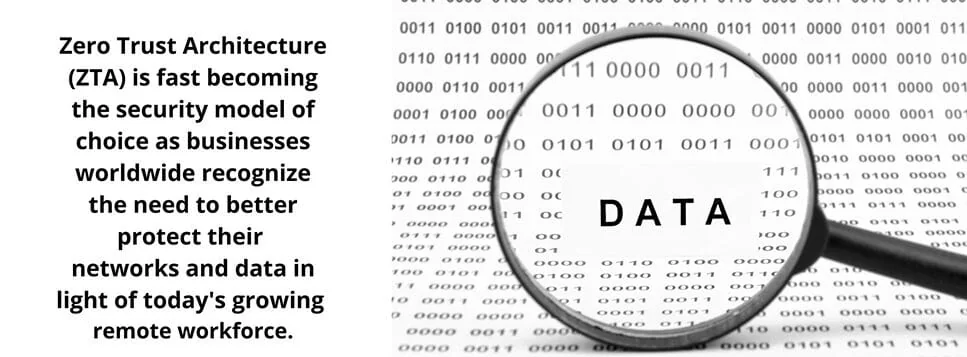
Zero Trust Architecture (ZTA) is fast becoming the security model of choice as businesses worldwide recognize the need to better protect their networks and assets in light of today’s growing remote workforce.
-
How to Use Zero Trust to Meet CMMC Access Control Practice
The Zero Trust Data Access architecture of FileFlex Enterprise can greatly aid in compliance with CMMC requirements and provides remote access and sharing to the entire company-owned storage infrastructure and puts it under IT control.
-
Making the Case for ZTDA Has Never Been More Obvious
ZTDA or Zero Trust Data Access technology is needed now more than ever to secure remote access and sharing of confidential files.
-
How to Meet NIST Guidelines for Zero Trust for Remote Data Access
The National Institute of Standards and Technology (NIST) has produced NIST Special Publication 800-207 outlining Zero Trust principles and guidelines that can be used to reduce cyber risk. This blog summarizes these guidelines for you and then shows how FileFlex Enterprise adheres to NIST standards to enable easy and secure zero trust remote access and sharing of files and folders from your organization’s multi-domain hybrid-IT storage infrastructure.
-
Why Zero Trust and Why Now?
The principle behind zero trust is very simple – never trust and always verify every transaction. This protects your organization in ways that other models cannot.
-
How to Protect Your Data with Zero Trust Data Access (ZTDA)
Implementing a Zero Trust Network Access platform and/or a Zero Trust Application Access platform is a good start, but ultimately is not enough. Zero Trust Data Access fills the missing piece to protect the organization’s most valuable asset – its data.
-
How to Enable Your Remote Workforce with Zero Trust-By-Design
Organizations have been depending on the use of VPNs, but VPNs provide a direct, trusted connection right past your perimeter defenses and allow access to your entire network infrastructure.
-
How to Mitigate Spear-Phishing via FileFlex Enterprise Zero Trust
FileFlex Enterprise is a remote access and sharing platform built from the ground up to be zero trust compliant. In addition to perimeter defenses, you use the FileFlex zero-trust approach and bring IT control over sharing. Zero Trust is a NIST standard that augments traditional perimeter-based security, by always authenticating and always verifying all transactions all the time or “never trust, always verify”.