Category: Hybrid-IT
-
Federated Hybrid Access: Why Modern Organizations Can't Afford to Ignore It
Federated hybrid access enables organizations to securely and consistently govern data across distributed hybrid IT environments by closing the zero trust data gap and restoring centralized control, compliance, and auditability.
-
Why a Zero Trust Data Access Decentralized Data Platform is Strategically Superior to Centralized Cloud File Access, Sharing and Collaboration
Centralized cloud models, while offering convenience, introduce significant security, privacy, and cost challenges, making Zero Trust Data Access a strategically superior solution for access, sharing and collaboration for unstructured data by leveraging existing infrastructure for enhanced security, control, and compliance.
-
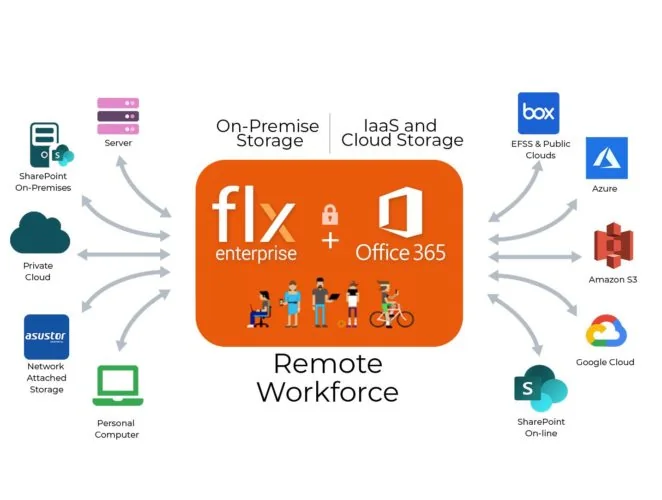
Extending Office 365 Functionality into a Hybrid-IT Infrastructure
How to access or share files stored on your hybrid-IT infrastructure other than on your own OneDrive or desktop compute.
-
How to Make Your Hybrid-IT and IaaS Infrastructure Easier for Users
Infrastructure-as-a-Service and a hybrid-IT multi-cloud environment add layers of complexity to your IT infrastructure. IT has learned to handle the complexity and the vendors have provided the tools to manage it, but what about tools for the end users. Sadly, these are lacking. This blog looks at the needs of your end-users, security concerns, issues of a virtual private cloud implementation and finally using the decentralized or edge architecture of FileFlex Enterprise to provide secure remote file access and file sharing cloud-hosted/multi-cloud storage while improving your security posture and allowing access to all storage.
-
What is Centralized Cloud vs Decentralized Hybrid-IT?
The FileFlex decentralized hybrid-IT zero-trust computing architecture differentiates it from the centralized model used by all other file remote access and sharing platforms. It improves the organization’s security posture, allows access to all storage, ensures privacy, keeps the management of organizational files under organizational control, accelerates compliance to privacy regulations such as GDPR and HIPAA, and leverages the organization’s existing storage infrastructure to produce a disruptive low-cost model that can be applied to all storage